
Thiel College is an AI Campus
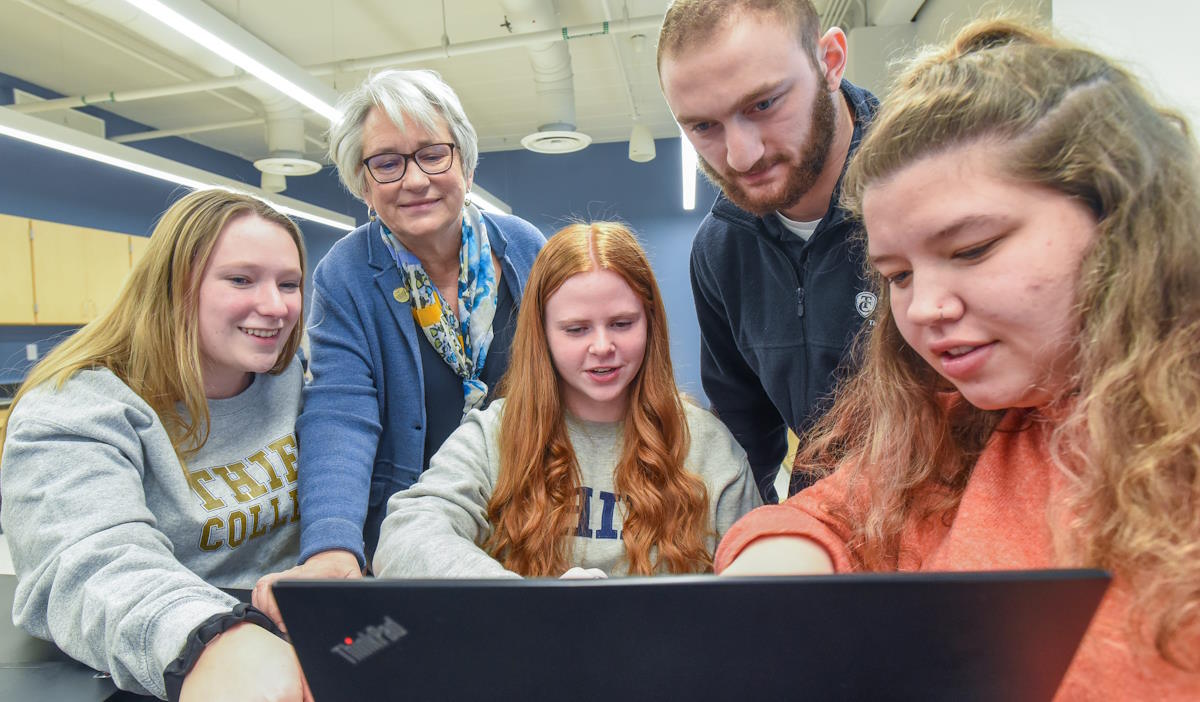
Build AI Skills. Bring Your Own Judgment.
Artificial intelligence is changing how people learn, create, and work. At Thiel College, we’re building an AI Campus that helps students explore this technology and use it thoughtfully.
Our approach connects emerging tools with what makes a Thiel education personal: close faculty relationships, practical learning, and support for your goals. As AI opportunities grow, our focus remains on helping students develop the judgment, creativity, and communication skills to use technology well.
Visit campus to meet the people who will support you and explore how Thiel can help you prepare for your future.
What Is an AI Campus?
At Thiel, an AI Campus means an ongoing effort to connect artificial intelligence with teaching, learning, student support, and career preparation.
We’re expanding opportunities for students to understand how AI works, evaluate its limitations, and consider its relevance to their interests. The goal is practical: help students build the knowledge and judgment to navigate changing technology.
An Investment in Student Success
Thiel provides access to BoodleBox, a shared AI platform for students, faculty, and staff to explore learning, creativity, and collaboration.
A $1.8 million federal Title III grant supports Thiel’s work in AI literacy, student success, academic support, and workforce pathways. These investments provide a foundation for developing opportunities and supporting faculty as they explore appropriate uses of AI.
See How AI Is Being Used in Thiel Classes
AI takes on meaning when students connect it with a real assignment, question, or problem. Thiel faculty currently guide students in using AI while strengthening their own understanding.
One such example is Principles of Marketing - an intro level marketing course mostly for sophomores and juniors.
Students gain hands-on, career-ready experience by tackling the real-world complexities of modern technology through projects like generating digital advertisements using AI tools. Rather than just using AI blindly, students actively critique their creations against real institutional brand standards and analyze potential real-world errors—such as hallucinated campus landmarks. This practical approach ensures students understand both the immense capabilities and the critical limitations of generative AI, transforming a trending technology into a highly practical asset within a professional graphic design and marketing toolbox.
AI takes on meaning when students connect it with a real assignment, question, or problem. Thiel faculty are helping students explore AI as a responsible learning tool while strengthening their own judgment, creativity, and communication skills. Across courses, students are being guided to use AI thoughtfully and ethically — not as a shortcut, but as a way to ask better questions, refine ideas, and prepare for real-world expectations.
Principles of Marketing: Creating and Critiquing AI-Generated Advertising
In Principles of Marketing, an introductory course often taken by sophomores and juniors, students gain hands-on, career-ready experience by exploring how AI can support modern marketing and design work.
Students use AI tools to generate digital advertisements, then evaluate those creations against institutional brand standards and real-world expectations. Rather than accepting AI output at face value, they critique the results for accuracy, tone, audience fit, and visual consistency. They also examine potential AI errors, such as hallucinated campus landmarks or details that do not reflect the Thiel experience.
This practical approach helps students understand both the capabilities and limitations of generative AI. By pairing creative production with critical evaluation, students learn how AI can become a useful part of a professional marketing toolkit while still requiring human judgment, brand awareness, and ethical decision-making.
Using AI to Strengthen Thesis Development and Academic Writing
Contributing Culturally, the Dietrich Honors Institute thesis capstone, students use AI to support the development and refinement of their senior thesis projects.
Students first work with a custom bot designed to help them understand the broader scholarly, cultural, or disciplinary context of their thesis. Through guided questioning, the bot helps students clarify where their project fits within a larger field of inquiry and how their ideas connect to existing conversations.
Later in the course, students engage with an editor bot that helps them identify unnecessary wording, improve clarity, and make their writing more concise. The emphasis is not on having AI write for them, but on helping students become more intentional writers. By using AI as a reflective partner, students practice revising their own work with greater awareness of structure, precision, and audience.
This approach supports the larger goal of the capstone experience: helping students develop an independent voice, communicate complex ideas clearly, and take ownership of their scholarly work.
Using AI to Support Reading, Discussion, and Idea Development
Envisioning, the sophomore Dietrich Honors Institute course, students engage with challenging readings across topics such as cosmology, the origins of life, and consciousness. Because many of these subjects are unfamiliar to students, AI is used to support deeper preparation for discussion and writing.
Students work with a bot that uses Socratic questioning to help them identify key concepts from scholarly articles, book chapters, and other course materials. Instead of simply summarizing the readings, the bot prompts students to think through difficult ideas, define important terms, and make connections in their own words.
Students also use AI to brainstorm essay ideas based on course readings. In these activities, the bot is designed to support students as they develop their own interpretations and arguments, rather than providing ready-made responses. The goal is to help students enter class discussions with more confidence and approach writing assignments with a clearer sense of their own emerging voice.
Together, these uses of AI reinforce the course’s emphasis on inquiry, reflection, and intellectual independence.
Speech-Language Pathology: Using AI to Support Clinical Practice and Patient Care
In Thiel’s Speech-Language Pathology program, students and professionals explore how AI can support healthcare, education, and clinical practice. Students connect with health sciences and patient care, building practical skills for a changing healthcare field while strengthening the communication, ethical reasoning, and decision-making skills needed for professional practice.
Through the workshop Beyond the Prompt: Practical and Clinical Applications of Generative AI in Speech-Language Pathology, participants learn how AI can help with tasks such as clinical documentation, assessment and treatment planning, patient and caregiver education, research review, and therapy-material development.
Participants practice using AI tools through live demonstrations and hands-on activities. They learn how to write stronger prompts, test AI responses, and apply AI to realistic clinical situations. The goal is not for AI to replace professional judgment, but to help future and practicing speech-language pathologists work more effectively.
Participants learn to check AI-generated content for accuracy, bias, privacy concerns, ethical issues, and alignment with evidence-based practice.
AI as a Tool for Thinking, Not a Shortcut
Across these courses, Thiel faculty are modeling a responsible approach to AI use. Students are encouraged to use AI tools to supplement their own thinking, learning, writing, and creativity — not to replace them.
The bots used in these courses are designed with guardrails that prevent students from receiving text they can simply copy and paste into assignments. Instead, students are prompted to question, clarify, revise, and reflect. This helps them understand AI as a powerful tool for learning and creative development while reinforcing the importance of academic integrity, personal judgment, and original work.
This approach reflects Thiel’s broader commitment to preparing students for a changing world: helping them build practical AI literacy while developing the human skills that remain essential — critical thinking, communication, ethical reasoning, and independent judgment.
Responsible AI Starts With Critical Thinking
Using AI well requires knowing when to question an answer, check a source, protect information, or choose another approach.
Thiel’s approach emphasizes:
- Accuracy: Checking claims and recognizing that AI can produce incorrect information.
- Fairness: Examining bias and considering how technology affects people.
- Privacy: Making thoughtful decisions about information shared with AI tools.
- Academic integrity: Following course expectations and taking responsibility for your work.
Faculty mentorship, discussion, and feedback remain central to learning. AI offers another opportunity to practice independent thinking and informed decision-making.
Connect Technology With Your Future
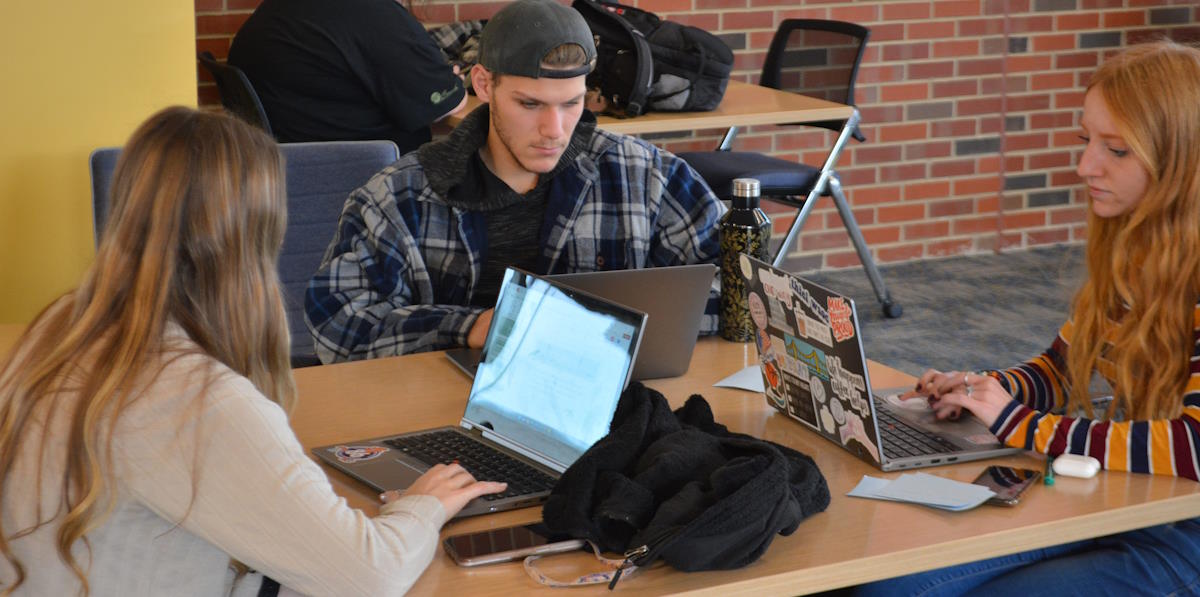
Understanding AI can help students consider how technology is changing their intended fields. Potential applications include analyzing information, developing ideas, practicing communication, and preparing for interviews.
At Thiel, that exploration takes place in a community where you’re known by name. Faculty and staff can help you connect your interests, academic experiences, and career goals as you consider new tools and their uses.
The emphasis is on building your capabilities and knowing how to apply your own judgment.
Questions About AI at Thiel
Is AI Learning Limited to Computer Science?
Thiel’s AI initiative is intended to support learning across disciplines. Specific opportunities depend on the course, instructor, and stage of implementation.
Can Students Use AI for Any Assignment?
AI use depends on the expectations of the course and assignment. Follow your instructor’s guidance, ask when you’re unsure, and take responsibility for the work you submit.
How Does AI Connect With Career Preparation?
AI is changing tasks and practices in many fields. Learning to evaluate its output, recognize its limitations, and use it responsibly can help students prepare to adapt as workplace expectations evolve.
Explore Your Future at Thiel
Build skills, discover your strengths, and prepare for what comes next in a community that supports your growth.
Visit Thiel to meet faculty, explore your interests, and learn more about our developing AI Campus.



 Webmail
 Campus Offices
 Directory
 Schedule an Event
 Maintenance Issue
 Spectrum U
 IT Support
 Academic Catalog
 Academic Resources
 Accessibility
 Attend & Assist
 Boodlebox
 Buy Books
 Calendar
 Campus Map
 Handshake
 Course List
 Library
 The Learning Commons
 Moodle
 Newsroom
 Public Safety
 Self Service
 Solution Center
 Pay My Bill
 Thiel Gear
 Tomcats Care
 Wellness Center